Latest Blog
Why IT Staffing Firms Need an AI Recruiter on Top of Their ATS
Researcher
•
5 min read
Share this post


Why IT Staffing Firms Need an AI Recruiter on Top of Their ATS
Most IT staffing firms do not need another place to store candidates.
They need a faster way to figure out who is real, who is qualified, who is available, and who deserves recruiter attention first.
That is the shift.
Your ATS is still essential. It is where jobs, candidates, stages, owners, and reporting live. But an ATS is not built to do the heavy lifting between “new applicant” and “ready to submit.”
An AI recruiter is.
For IT staffing firms, that gap matters more than ever. Resume volume is high. Misrepresentation is real. Candidate speed matters. Client trust matters. And the firms that can screen, rank, verify, and re-engage talent faster are the firms that win the req.
ATS vs AI recruiter for IT staffing: what is the difference?
An ATS is your system of record. An AI recruiter is your system of execution.
An ATS shines at: storing candidate records, tracking pipeline stages, assigning ownership, supporting reporting, and keeping your recruiting process organized.
An AI recruiter shines at: screening applicants, ranking fit, identifying risk, rediscovering past candidates, taking structured notes, and moving recruiters toward the best next action.
That is why this is not an “ATS or AI recruiter” decision.
It is an “ATS plus AI recruiter” decision.
The mistake most IT staffing firms make
Many staffing leaders think recruiting speed problems are technology stack problems.
Usually, they are execution problems.
The firm already has an ATS. The database exists. The workflow exists. The issue is that recruiters are still spending too much time on work that should not require human effort at all:
Reading too many resumes that will never turn into a submission
Running repetitive first-pass screens
Typing notes instead of using them
Searching an old database manually
Finding fraud late instead of early
Prioritizing based on inbox order instead of actual fit
That is the commercial insight.
Most IT staffing firms do not have a candidate storage problem.
They have a recruiter bandwidth problem.
Where an ATS still shines
An ATS remains the foundation of the workflow. You still need it.
1. System of record
Your ATS keeps jobs, applicants, stages, owners, activity history, and compliance records in one place.
2. Process control
It helps standardize how your team moves candidates from intake to interview to submit to placement.
3. Reporting and visibility
Managers need to know what is happening in the funnel. The ATS gives leadership a common source of truth.
4. Integration hub
Your ATS often sits in the middle of the staffing stack, connecting sourcing tools, CRM functions, job distribution, and analytics.
None of that changes.
But none of that solves the biggest day-to-day bottlenecks inside IT staffing either.
Where an AI recruiter shines
This is where the category earns its place.
An AI recruiter is not valuable because it sounds modern. It is valuable because it absorbs the repetitive work that slows your team down and adds a new layer of signal your ATS does not create by itself.
1. Voice AI screening
Resumes tell you what a candidate wants you to believe.
A structured voice screen tells you a lot more.
For IT staffing, that matters because clients are not paying for keyword alignment. They are paying for capability, clarity, credibility, and fit.
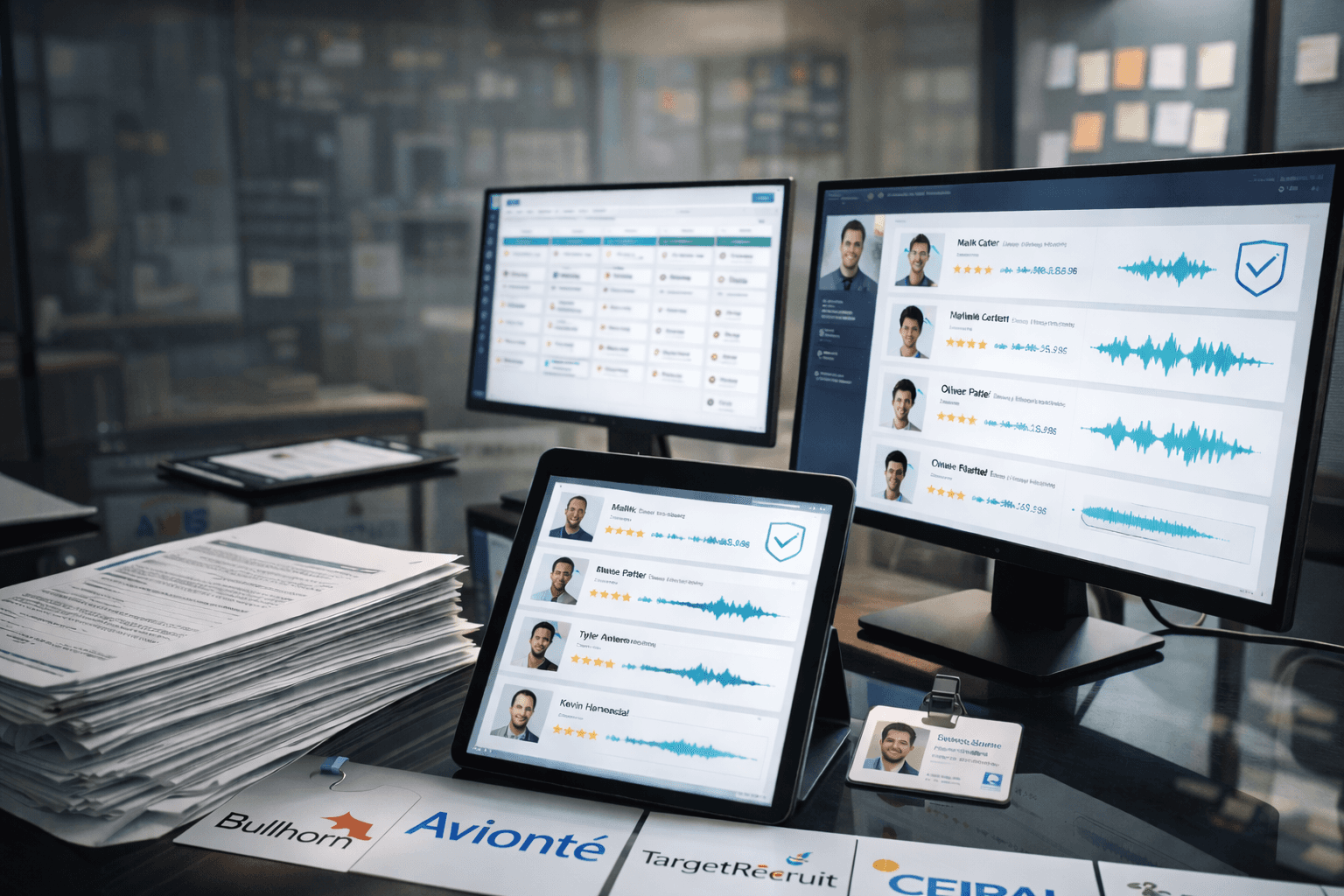
A strong AI recruiter can run structured voice screening at scale and capture richer signal around experience, communication, project relevance, location, work authorization, rate expectations, availability, and role fit.
That means recruiters spend less time on weak applicants and more time on candidates who are actually worth advancing.
2. Applicant ranking
Most ATS platforms can filter and search.
That is not the same thing as ranking candidates the way a strong recruiter would want them ranked.
An AI recruiter can help prioritize candidates using a broader set of inputs, including resume content, screening responses, recruiter-defined criteria, availability, and job alignment.
That changes recruiter behavior in a meaningful way.
Instead of opening the first 50 applicants and hoping the right one is buried somewhere in the stack, recruiters can start with the strongest candidates first.
In IT staffing, that is not a convenience. It is a speed-to-submit advantage.
3. Fraud prevention and ID verification
This is one of the clearest reasons IT staffing firms need more than an ATS.
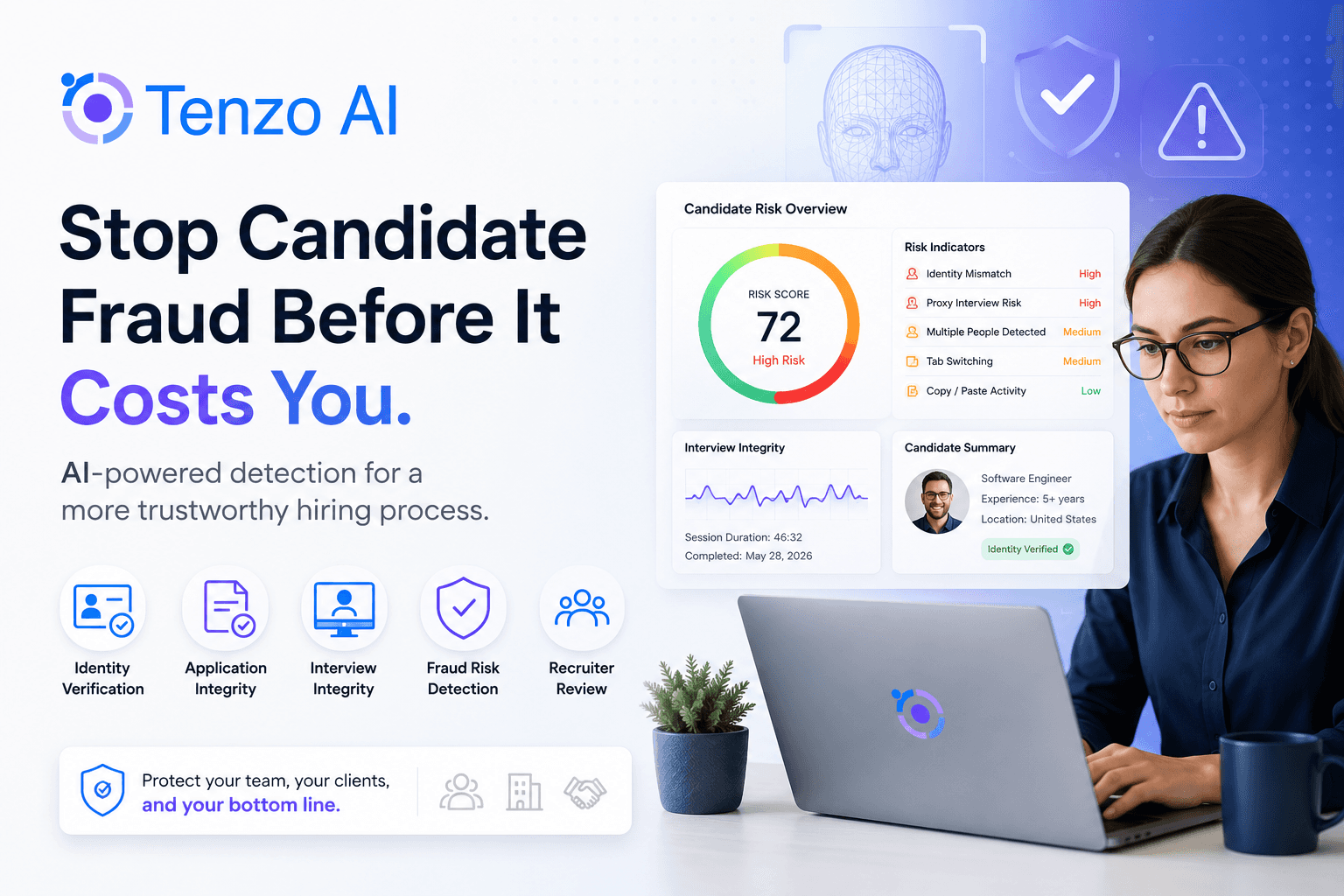
Technical staffing deals with real identity and representation risk. Fake candidates. Proxy interviews. Resume inflation. Candidates whose paper profile is stronger than the person who actually shows up.
An ATS records the workflow around those candidates. It does not solve the problem.
An AI recruiter can add a fraud prevention layer earlier in the funnel through identity-aware workflows, ID verification steps, and more structured screening that makes inconsistencies easier to catch before recruiter time and client trust are wasted.
That is not just operationally useful.
It protects margin and reputation.
4. Candidate rediscovery
Most IT staffing firms are sitting on years of underused candidate data.
Past applicants. Past contractors. Silver medalists. Candidates who were good, just not right for that req at that moment.
Your ATS stores all of that.
But storage is not the same thing as activation.
An AI recruiter can search, re-engage, re-qualify, and surface candidates from your existing database so recruiters are not forced to start from scratch every time a new req opens.
That is especially valuable in IT staffing, where speed matters and prior relationships can shorten the path to a qualified shortlist.
5. Recruiter note-taking
Recruiters create valuable signal every day. The problem is that too much of it lives in scattered notes, inconsistent ATS entries, or memory.
That slows down handoffs, weakens submissions, and makes the database less useful over time.
An AI recruiter can capture and structure notes from candidate conversations automatically, which improves data quality without forcing recruiters to spend more time on admin.
That means cleaner records, stronger handoffs, and more usable intelligence across the team.
Why this matters specifically in IT staffing
Every staffing segment benefits from better execution, but IT staffing feels the pain earlier and more sharply.
High applicant volume: technical roles can bring in a lot of inbound, especially for remote and hybrid jobs.
Higher verification risk: identity issues and misrepresentation are especially costly in technical hiring.
Client expectations are unforgiving: clients do not want a pile of resumes. They want a shortlist they can trust.
Speed changes win rates: the faster you identify strong candidates, the more often you make the shortlist before competitors do.
Top recruiters are expensive: their time should go toward relationship building, calibration, closing, and client influence, not repetitive admin.
That is why IT staffing firms should not ask, “Can our ATS do more?”
The better question is, “What work should our recruiters stop doing manually?”
The stakeholder case for an AI recruiter
The best commercial insights do not just create interest. They build internal alignment.
An AI recruiter on top of your ATS matters for more than one buyer.
Owners and executives
They care about recruiter productivity, time to submit, gross margin, and how many reqs each desk can handle without adding headcount.
Recruiting leaders
They care about consistency, funnel quality, database utilization, and whether the team is working the highest-value candidates first.
Top recruiters
They care about getting fewer bad leads, better candidate context, less admin, and more time to build relationships and close.
Account managers and delivery leaders
They care about submission quality, client confidence, and the ability to move faster on urgent roles without lowering standards.
Clients
They care about trust. They want qualified candidates who are real, vetted, and ready to move.
That is why the best AI recruiter story is not “We automate tasks.”
It is “We help every stakeholder get better outcomes from the same ATS and the same team.”
What Tenzo AI adds on top of your ATS
Tenzo AI is built for the work that happens between application and recruiter action.
That is the layer most ATS platforms do not own deeply enough.
On top of your ATS, Tenzo AI can help IT staffing firms:
run voice AI screening at scale
rank applicants based on stronger fit signals
add fraud prevention and ID verification steps earlier in the funnel
rediscover candidates already sitting in the database
capture recruiter notes in a cleaner, more structured way
help recruiters move faster without sacrificing quality
The result is not just more automation.
It is a better operating model.
Your ATS continues to manage the workflow.
Tenzo AI helps drive the work.
The new operating model for IT staffing
The firms that win over the next few years will not be the ones with the largest databases alone.
They will be the ones that can turn database volume into verified, ranked, submission-ready talent faster than everyone else.
That requires two things:
a system of record
a system of execution
Your ATS is the system of record.
An AI recruiter is the system of execution.
You need both.
Frequently asked questions
Do IT staffing firms still need an ATS if they use an AI recruiter?
Yes. The ATS remains the system of record for jobs, candidates, stages, reporting, and workflow management. The AI recruiter adds execution on top of that foundation.
What can an AI recruiter do that an ATS usually cannot?
An AI recruiter can screen candidates, rank applicants, support fraud prevention and ID verification workflows, rediscover past candidates, and capture structured recruiter notes at scale.
Why is fraud prevention so important in IT staffing?
Because candidate misrepresentation can waste recruiter time, damage client trust, and slow down placements. Catching risk earlier improves both speed and quality.
What is candidate rediscovery?
Candidate rediscovery is the process of finding relevant people already in your database, re-engaging them, and determining whether they are a fit for a current role.
Will AI recruiters replace human recruiters?
No. The best use of an AI recruiter is to remove repetitive screening and admin work so recruiters can spend more time building relationships, influencing clients, and closing candidates.
Final thought
If you run an IT staffing firm, your ATS is necessary.
But it is no longer enough by itself.
The real bottlenecks are not about storing records. They are about screening faster, ranking better, preventing fraud earlier, reactivating overlooked talent, and capturing better recruiter intelligence without slowing the team down.
That is where an AI recruiter creates leverage.
And that is why the firms that layer AI recruiting on top of their ATS will outperform the firms that keep asking recruiters to do everything manually.
See how Tenzo AI fits on top of your ATS
If you want to see how Tenzo AI helps IT staffing firms run voice screening, applicant ranking, fraud prevention workflows, candidate rediscovery, and recruiter note-taking on top of the systems they already use, book a Tenzo AI demo.